A vibrating phone triggers an accidental gunshot
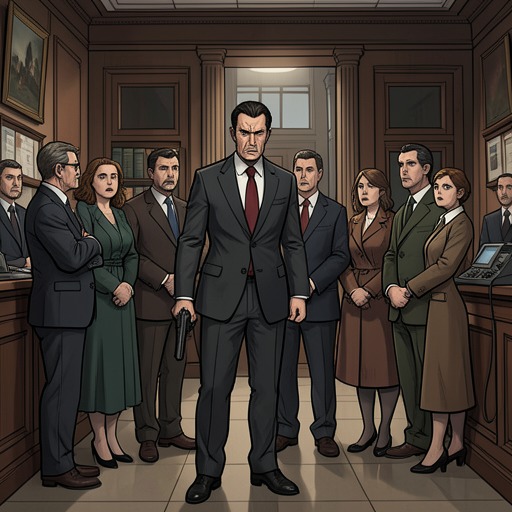
Anxious PeopleA call meant to bring the Bank robber to a peaceful surrender instead produces a gunshot that sounds like a suicide. The sound sends police toward the wrong explanation: the shot was accidental, caused by the vibrating Special phone shaking The pistol off a precarious table, and the Bank robber was already gone. The episode turns a small operational oversight into the apparent end of the hostage crisis—and then into the clue that exposes how its ending was staged.
The call and the apparent shot
The police had sent the Special phone into the Hostage apartment so that they could communicate with the Bank robber. It was a specialist device, useful because it could make calls where ordinary reception was poor. Jack valued the equipment; Jim, who did not share his son’s fluency with police technology, continued to think of it as a special telephone thingy. The device mattered less for its technical name than for the practical connection it offered between the negotiator and the person inside.
Jim had proposed sending the phone in. After the hostages were released, the negotiator called the Bank robber on it, hoping to arrange a peaceful surrender. Instead, officers heard a shot. Because the call came after the release, the sudden sound seemed to mark a new and terrible turn: the Bank robber appeared to have shot herself. The phone was not simply a communication channel at that point; it had become the apparent witness to a death.
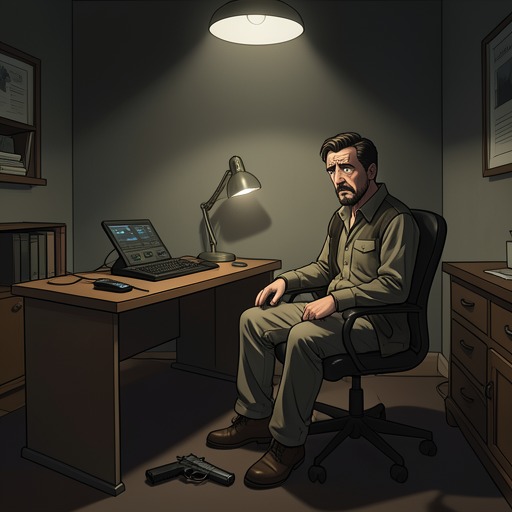
A basic precaution had been missed before the phone went into the apartment. Jack had told Jim to make sure its ringtone was set properly, but it was not. The phone was on a small table that stood unevenly on three legs, and The pistol lay beside it. When the call came through, the phone vibrated; the table shook, and The pistol fell to the floor and fired. The bullet lodged in the wall behind a green curtain. Nothing in this chain required the Bank robber to pull the trigger: the shot arose from the interaction of a misconfigured phone, unstable furniture, and a weapon left within reach of the table’s movement.
Jack reconstructs what happened
The sound initially supplied a convincing but false account of events. Police had entered the apartment believing that the Bank robber had shot herself, and the presence of The pistol and blood appeared to support that interpretation. Jack’s later examination of the room breaks the sequence apart. He touches the unstable table, identifies where The pistol was found, traces the bullet’s path to the wall, and recognizes that the Bank robber could not have fired from inside the apartment at the moment the shot was heard.
The physical arrangement explains the sound, but Jack’s most consequential deduction concerns the timing. The Bank robber was not in the apartment when the gun fired; she had already left. The blood was stage blood, poured out in advance to make the scene look like a suicide. What had seemed to be the crisis’s final, irreversible act was instead an accidental discharge that helped sustain a deception. The shot did not disclose the Bank robber’s fate. It obscured her absence.
Jim listens as Jack lays out the explanation. His response is not anger at being corrected but pride in his son’s reasoning, a quiet counterpoint to the grim discovery. Jack, however, finds no satisfaction in being right. Solving the apparent shooting means recognizing that the police’s understanding of the scene was wrong in a more fundamental way: they had mistaken an empty apartment for the place where the Bank robber had died.
Consequences and narrative significance
The accident joins two kinds of police failure. The missed ringtone setting makes the phone’s vibration possible, while the officers’ interpretation of the resulting shot turns a mechanical mishap into a false account of what happened. The device intended to maintain contact with the Bank robber instead triggers the gunfire that seems to end contact altogether. Its usefulness and its danger come from the same role: it can reach into the apartment, but its vibration sets the surrounding objects in motion.
The episode also reverses the apparent meaning of the blood and the shot. The blood is not evidence of a self-inflicted wound, and the gunshot is not proof that the Bank robber remained inside. Both had encouraged the police to imagine a death where the actual sequence involved an accidental discharge and an earlier escape. Jack’s reconstruction restores cause and order to the details, but it cannot undo the mistaken conclusion that officers drew when they first heard the shot.
Placed after the hostages’ release, the event makes apparent resolution unreliable. The negotiator’s call seems to offer a final opportunity for peaceful surrender; the shot seems to settle the crisis in the worst possible way. Only the room’s physical clues reveal that neither appearance is true. A phone, an uneven table, The pistol, and a bullet in the wall turn an apparent suicide into the mechanism by which the Bank robber’s departure remained hidden.